YouTube Shorts Best Practices for 2026: What Actually Gets Views
YouTube Shorts has become one of the most powerful discovery tools on the platform. A single strong Short can introduce your channel to thousands of new viewers who had never heard of you.
But the Shorts algorithm is demanding. Here's what's actually working in 2026.
Why Shorts Are Worth Your Time
Shorts appear in a dedicated feed that YouTube surfaces to users regardless of whether they follow your channel. This gives creators a way to reach completely new audiences — something that's become much harder on the main feed as the platform has matured.
For newer channels especially, Shorts offer an opportunity to build an initial audience faster than long-form content alone.
The Single Most Important Metric: Completion Rate
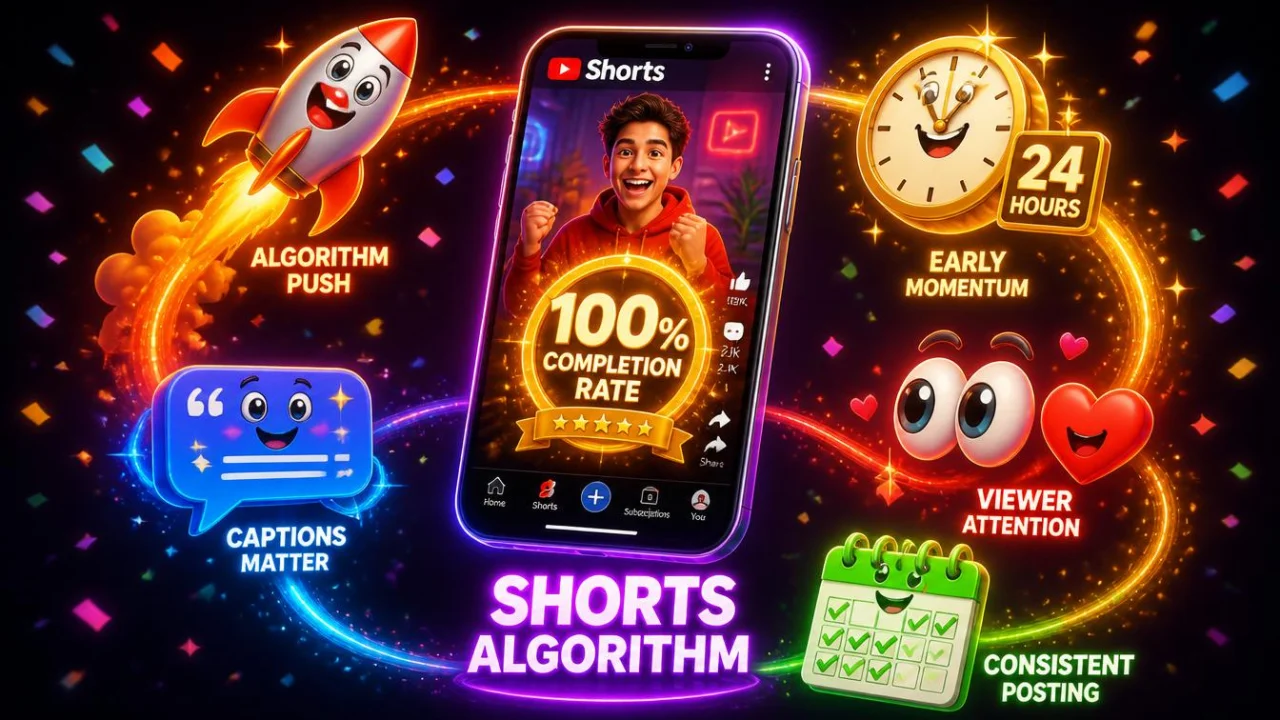
Everything about Shorts success comes back to completion rate — the percentage of viewers who watch your Short all the way to the end.
YouTube's algorithm interprets a high completion rate as a signal that viewers found your content compelling. It responds by pushing the Short to more viewers. A low completion rate causes the algorithm to stop recommending the content.
Every best practice for Shorts ultimately exists to improve completion rate.
Start Immediately — No Exceptions
The first 1–2 seconds of your Short determines whether viewers will stay or swipe. There's no time for a logo animation, an intro card, or a preamble about what the video contains.
Start with the most compelling element of your content. If you're teaching something, start with the most surprising or counter-intuitive point. If you're entertaining, start at the peak moment. If you're sharing information, begin with the most interesting fact.
The rest of the Short can provide context. The opening has to earn the viewer's attention.
Keep It Under 45 Seconds When Possible
Shorter Shorts have higher average completion rates. A 25-second Short that viewers watch fully generates a stronger signal than a 60-second Short that most people abandon at 40 seconds.
Unless your content specifically requires more time, aim for 30–45 seconds. Cut everything that doesn't directly add value.
Always Use Captions
Research consistently shows that the majority of Short-form content is consumed without sound — on commutes, in waiting rooms, in quiet environments. Without captions, you're invisible to a significant portion of potential viewers.
Add captions to every Short. Keep them large and readable on a phone screen.
Vertical Format is Non-Negotiable
Shorts must be filmed in a 9:16 vertical aspect ratio (1080 x 1920 pixels). Horizontal video cropped for Shorts performs poorly. Film vertically from the start.
Post Consistently, Not Sporadically
The Shorts algorithm rewards consistency. Three Shorts per week consistently outperforms ten Shorts published in one burst followed by two weeks of silence.
Find a pace you can maintain sustainably — whether that's daily, three times per week, or weekly — and stick to it.
The First 24 Hours Matter
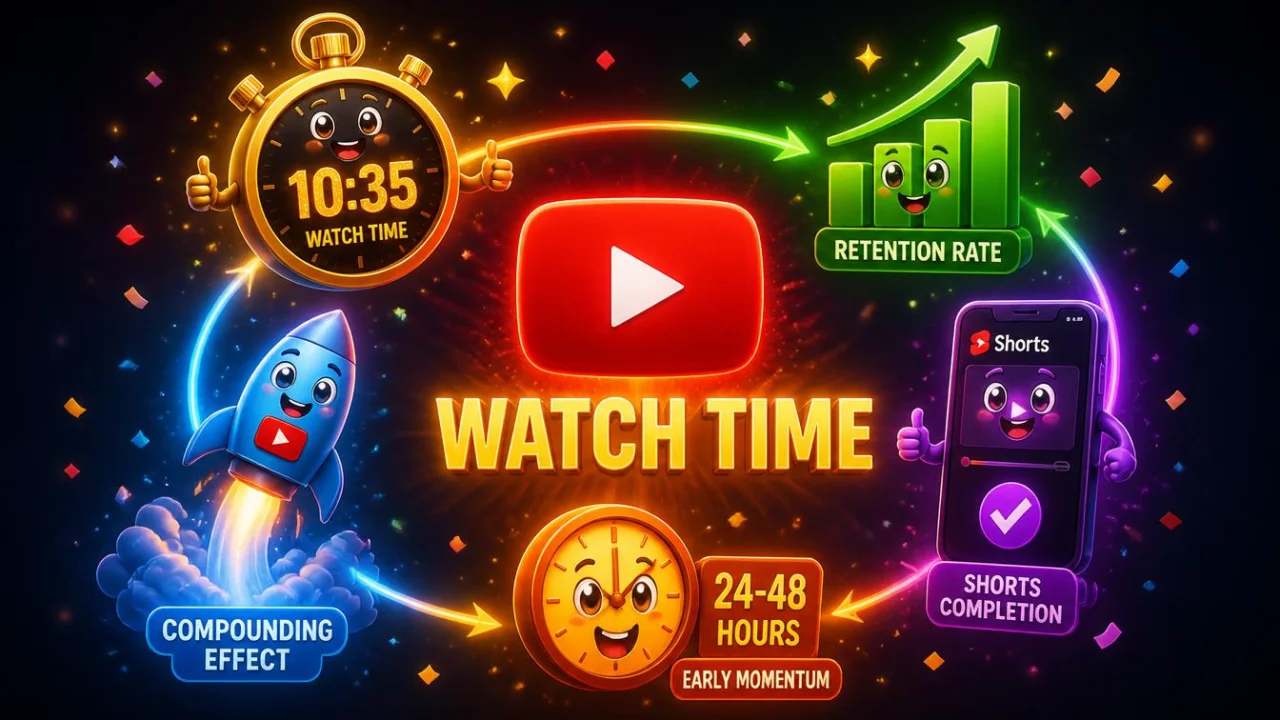
YouTube evaluates new Shorts quickly and uses early performance data to decide whether to push them to a wider audience. Getting real engaged viewers to watch your Shorts to completion in the first 24 hours after publishing gives the algorithm positive signals to work with.
Web promotion platforms like AutoWebSurf include video promotion features that connect your Shorts with community members who watch full-duration. Because these are real users watching on real devices, the engagement is genuine — the kind that YouTube's algorithm evaluates positively.
Combined with strong content and consistent posting, this kind of early genuine engagement helps establish the completion rate signals that drive organic reach.
Experiment and Track Everything
The Shorts algorithm rewards specific types of content differently at different times. What works in one niche may not work in another. What worked six months ago may perform differently today.
Check your YouTube Studio analytics weekly. Look at which Shorts have the highest completion rates and try to understand why. Replicate those elements in future content.
Growth on Shorts is iterative. Every Short teaches you something about what your audience responds to. Apply those lessons and improve over time.