How Watch Time Affects Your YouTube Channel Growth (And What You Can Do About It)
If you've been trying to grow a YouTube channel and feeling like you're getting nowhere, watch time is probably the metric you need to focus on most.
Here's everything you need to know.
What is Watch Time?
Watch time is the total number of minutes viewers have spent watching your videos. YouTube tracks it across your entire channel as well as for individual videos.
It's not just a number in your analytics dashboard — it's YouTube's primary signal for deciding which videos and channels to recommend to more people.
Why YouTube Cares So Much About Watch Time
YouTube makes money from ads. Ads require viewers to be on the platform. So naturally, YouTube's algorithm is designed to keep people watching for as long as possible.
This means YouTube actively promotes channels and videos that keep viewers engaged. When your watch time is strong, YouTube surfaces your content in:
- The Home feed
- Suggested videos (the right sidebar)
- Search results
- The Shorts feed (for Shorts)
When watch time is weak, YouTube stops recommending your content — regardless of how many subscribers you have or how often you publish.
Watch Time vs Retention Rate
Watch time and retention rate are related but different.
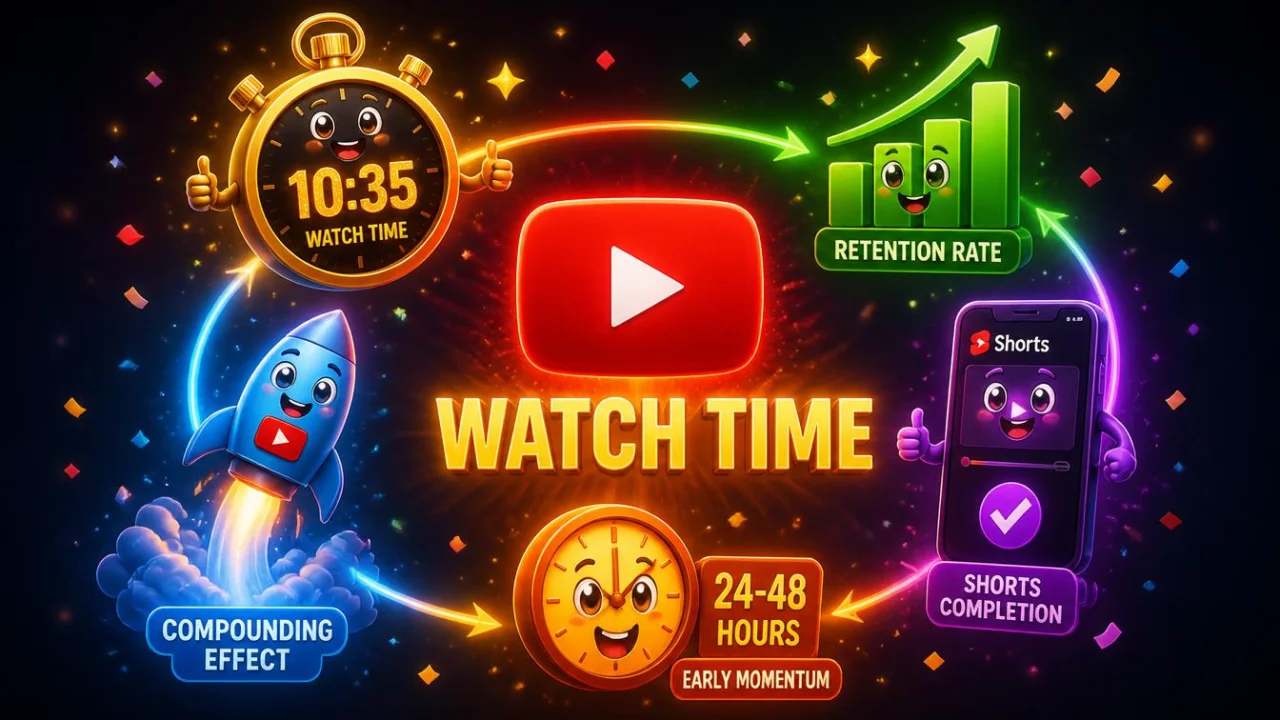
Watch time is the total minutes watched. It grows as your channel gets more views overall.
Retention rate (or "average view duration percentage") is how much of each video viewers actually watch. A video with 80% average retention is performing excellently. Under 30% is a concern.
YouTube weighs both. A video that gets 1,000 views with 80% retention will be pushed far more aggressively than a video with 10,000 views and 15% retention.
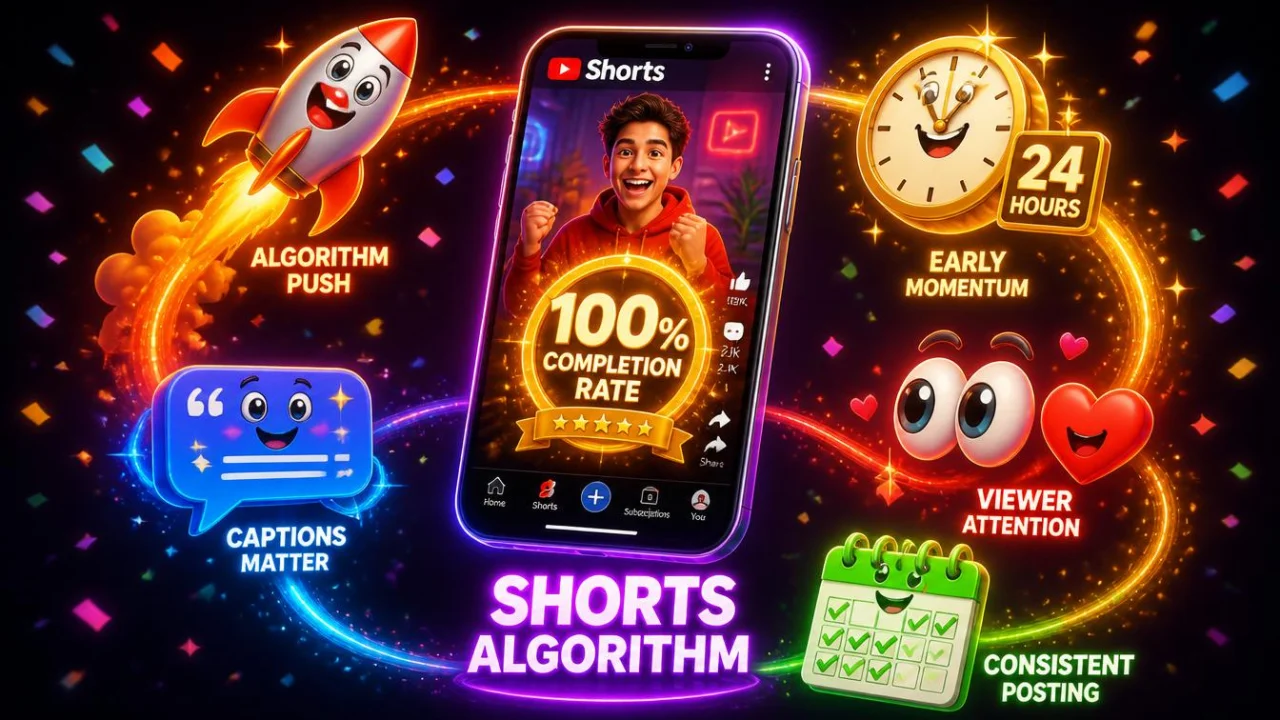
For Shorts specifically, completion rate (whether viewers watched all the way to the end) is the primary retention signal.
How to Improve Watch Time and Retention
Hook viewers in the first 30 seconds Most viewers who are going to click away do so within the first 30 seconds. Your opening needs to immediately signal what the viewer will get from watching and why it's worth their time. Don't start with a long intro or background — start with the value.
Deliver on your title and thumbnail If your title promises something specific, deliver it fully. Clickbait that doesn't deliver destroys retention and trains YouTube's algorithm to stop recommending your content.
Keep pacing tight Review your audience retention graph in YouTube Studio. Look for where viewers drop off and examine those moments in your video. Long pauses, slow sections, and tangents all cause drop-offs. Cut them.
End with a clear next step Don't let your video simply run out. Direct viewers to another relevant video, use end screens effectively, and encourage subscriptions naturally within the content — not just as a scripted reminder at the start.
Get initial views from real engaged viewers New videos struggle with the same cold-start problem as new websites. Without initial view data, YouTube has nothing to evaluate.
Platforms like AutoWebSurf's video promotion feature connect your videos with community members who watch for extended durations providing genuine watch time data that gives YouTube something real to evaluate. Unlike bot views that YouTube identifies and removes, community-generated views come from real users watching on real devices.
For YouTube Shorts
Shorts operate on a slightly different model. The key metric is completion rate — whether viewers watch to the very end.
To maximise Shorts completion rate:
- Keep them under 45 seconds when possible
- Get to the point immediately — no intro cards, no slow build
- Use captions (most Shorts are watched without sound)
- End with a clear, satisfying conclusion — not a cut-off
Building consistent Shorts completion rates signals to YouTube that your content is worth pushing to a wider audience.
The Compounding Effect
Watch time compounds. When a video performs well, YouTube recommends it, which brings more views, which improves total watch time, which causes YouTube to recommend it even more. The opposite is also true.
This is why the early performance of a video matters so much. Getting real viewers to watch meaningful portions of your content in the first 24–48 hours after publishing gives YouTube genuine data to make its initial recommendation decision.
Strong hook + quality content + real initial engagement = the conditions for watch time growth.